Translate Vietnamese to English in Real-Time Chat Conversations
Introduction
For people who communicate across Vietnamese and English, translation is not an occasional task—it is part of daily conversation.
Messages arrive in different languages, replies are typed instinctively, and meaning depends not only on accuracy, but also on timing, tone, and continuity. In these moments, the biggest challenge is not understanding words, but keeping the conversation moving naturally.
Most translation tools were not designed for this kind of interaction. They assume translation is something users decide to do, rather than something that should happen automatically. As a result, conversations slow down, responses feel delayed, and communication becomes mentally exhausting.
A better approach is emerging: real-time chat translation that works by default. Instead of interrupting conversation, translation fades into the background, allowing people to focus on what they want to say rather than how to translate it.
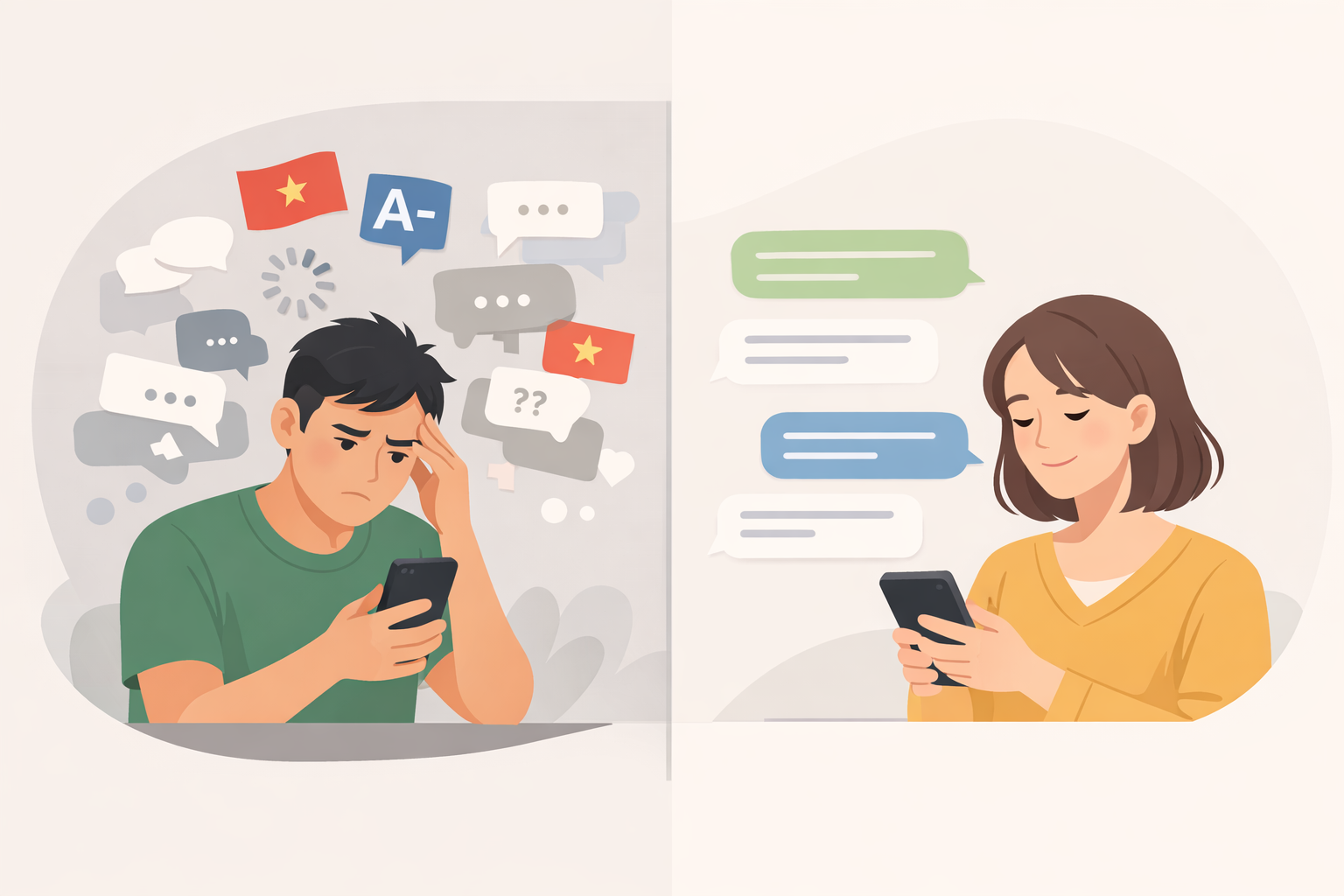
Why Bilingual Chats Fail With A Traditional English To Vietnamese Translator
Traditional translation tools are built around sentences, not conversations.
A typical English to Vietnamese translator works well when users paste a single sentence, wait for a result, and move on. But real chats are continuous. Messages overlap, ideas evolve mid-conversation, and responses are shaped by context rather than grammar alone.
In Vietnamese–English communication, this mismatch creates several problems:
- Users think in one language but must express themselves in another
- Conversations move faster than translation tools can support
- Each translation action forces a mental context switch
Even when a Vietnamese English translator is accurate, it still interrupts the natural flow of thinking. Over time, this interruption accumulates into cognitive fatigue. People reply more slowly, simplify their thoughts, or avoid expressing nuance altogether.
The issue is not translation quality—it is the translation process.
How Manual Tools Disrupt Flow When You Translate English To Vietnam
Chat-based communication relies on momentum.
When users manually translate English to Vietnamese, translation becomes a discrete action inserted into a continuous exchange. This breaks conversational rhythm in several ways.
First, timing suffers. By the time a translated message is ready, the conversation may have already moved on. Second, emotional tone gets lost. Humor, hesitation, or urgency rarely survive delayed translation. Third, users become overly cautious, rewriting messages to make them “easier to translate.”
This is why many people using viet translation tools feel that they sound less natural in conversations. The act of translating becomes part of their mental workload.
In group chats, the problem is amplified. Messages in different languages arrive simultaneously, and switching between tools becomes impractical. Even a reliable Vietnamese translation to English tool cannot keep up if it requires constant manual input.
For real-time communication, translation must operate at the same speed as conversation itself.
When Translate Vietnamese To English Becomes The Default State
Real-time translation only works when users stop thinking about it.
When translate Vietnamese to English is treated as an optional feature, users must constantly decide:
- Should I translate this message?
- Which language should I reply in?
- Do I need to check the original text?
Each decision adds friction. By contrast, when translation becomes the default state, these decisions disappear. Messages are automatically displayed in the user’s chosen language. Replies can be written naturally, without planning around translation.
This shift—from translation as an action to translation as an environment—changes how people communicate. Conversations feel faster, more spontaneous, and more human.
Instead of managing language, users manage meaning. This is the core difference between document-based translation and real-time chat translation.
How Intent Works As An Invisible English To Vietnamese Converter
Intent is designed around this default-translation principle.
Rather than acting as a separate English to Vietnamese converter, Intent embeds translation directly into the chat experience. All incoming messages are automatically translated into the user’s preferred language. Users can send messages in any language, and recipients receive them translated into theirs.
Key aspects of this approach include:
- Automatic display in the target language Messages arrive already translated, without requiring user action.
- Optional access to original text Users can view the original message at any time, preserving transparency and trust.
- Flexible control over translation Automatic translation can be turned on or off, giving users full language autonomy.
This design reduces the mental effort required to communicate across languages. Users no longer function as translators; they function as participants in a conversation.
Because translation is embedded, Intent behaves less like a tool and more like a natural English translator to Vietnamese operating quietly in the background.
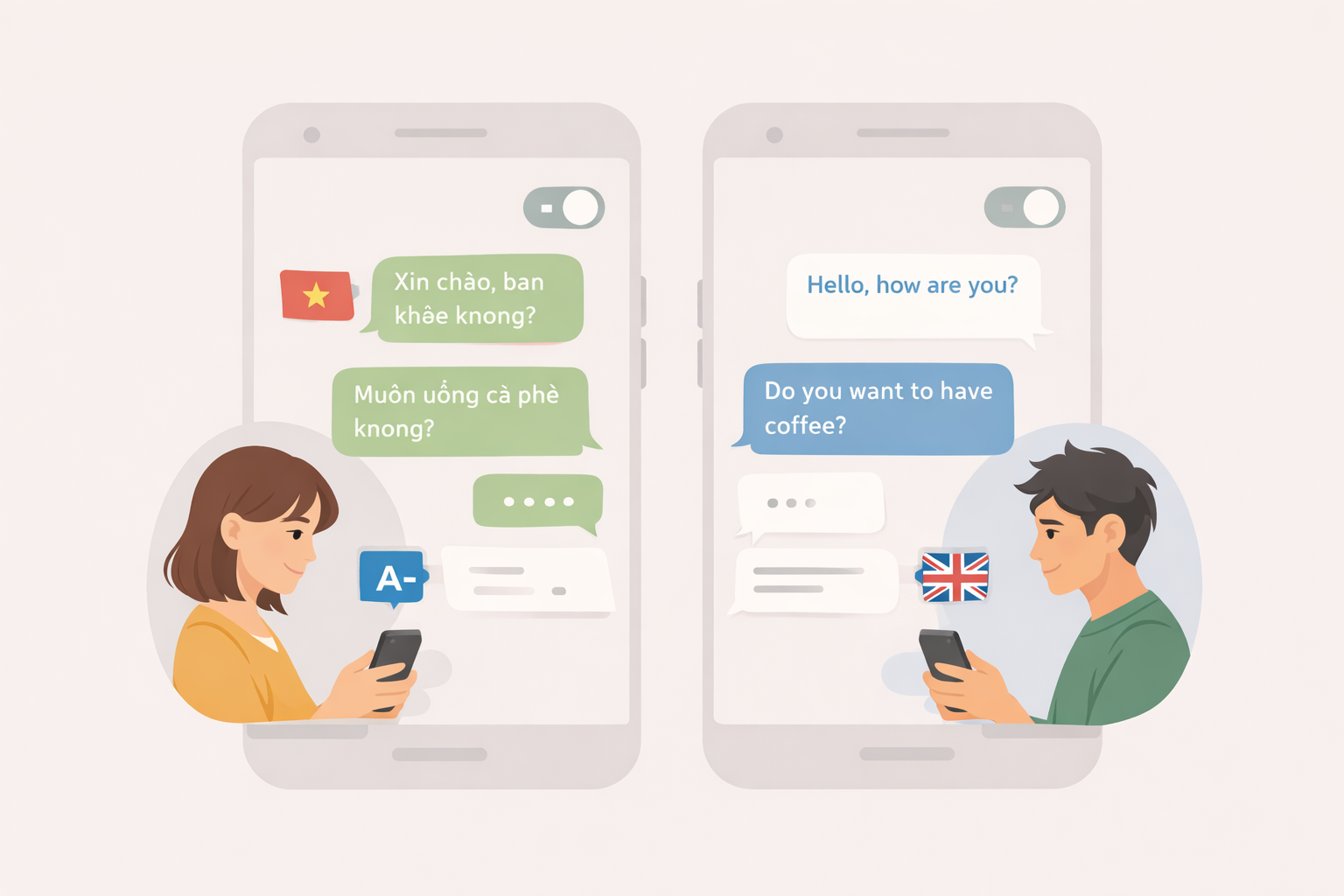
Real-Time Chat Translation Creates Natural Cross-Language Talk
When translation becomes seamless, communication changes.
Users who rely on Vietnamese translate to English in real-time begin to express themselves more fully. They use longer messages, nuanced phrasing, and natural timing. Conversations regain emotional texture.
This effect is especially noticeable in scenarios such as:
- Cross-border teamwork
- International friendships
- Multilingual families
In these contexts, real-time chat translation allows people to remain themselves. Language differences no longer dictate who speaks more or who adapts.
By removing friction, real-time translation supports equality in conversation. Whether using a Vietnamese to English translator or replying in another language, all participants interact on equal footing.
Conclusion
The goal of translation is not merely accuracy—it is understanding without interruption.
For users who communicate across Vietnamese and English every day, traditional translation tools fall short because they demand constant attention. Real-time chat translation offers a better alternative by making translation automatic, invisible, and user-controlled.
By allowing translate Vietnamese to English to happen by default, Intent transforms translation from a task into an environment. Conversations move naturally, meaning is preserved, and users retain full control over their language experience.
In a world where multilingual communication is increasingly common, the future of translation is not separate tools—but conversations that simply work.