How to Translate Voice Messages Without Switching Apps
Why Translating Voice Messages Still Feels So Awkward
If you’ve ever tried to translate a voice message during a multilingual conversation, you already know how awkward the process feels. You listen, pause, switch apps, replay, copy phrases, open a translator, and then try to piece everything together. By the time you’re done, the moment — and often the emotional tone — is gone.
This frustration isn’t theoretical. It shows up constantly in real communities where people are trying to build smoother cross language communication.
Recently, a Reddit user asked:
“Are there chat apps with built-in translation that don’t rely on Google services? I’m trying to reduce my reliance on Google Translate… One issue I keep running into is messaging across languages. Most solutions require switching apps… I’m looking for translation that happens inside the conversation.”
That question captures a growing need: people don’t just want translation — they want chat translation that feels invisible, private, and integrated directly into their conversations.
The Real Problem: Language Barriers Create Workflow Friction
For international couples, remote teams, multilingual families, or anyone navigating a language barrier, constantly jumping between apps turns communication into a technical task. Voice messages, which should feel expressive and human, become the most frustrating part of the workflow.
The core problem isn’t translation accuracy. It’s friction.
Traditional translation tools treat voice messages as separate content to process. You receive a voice note in another language, replay it, guess meaning, switch apps, interpret the result, and return to chat. This breaks conversational rhythm. Tone gets flattened. Timing disappears. Emotional nuance is lost. What should feel natural becomes a decoding exercise.

A Smarter Approach: Intent and Built-In Real-Time Chat Translation
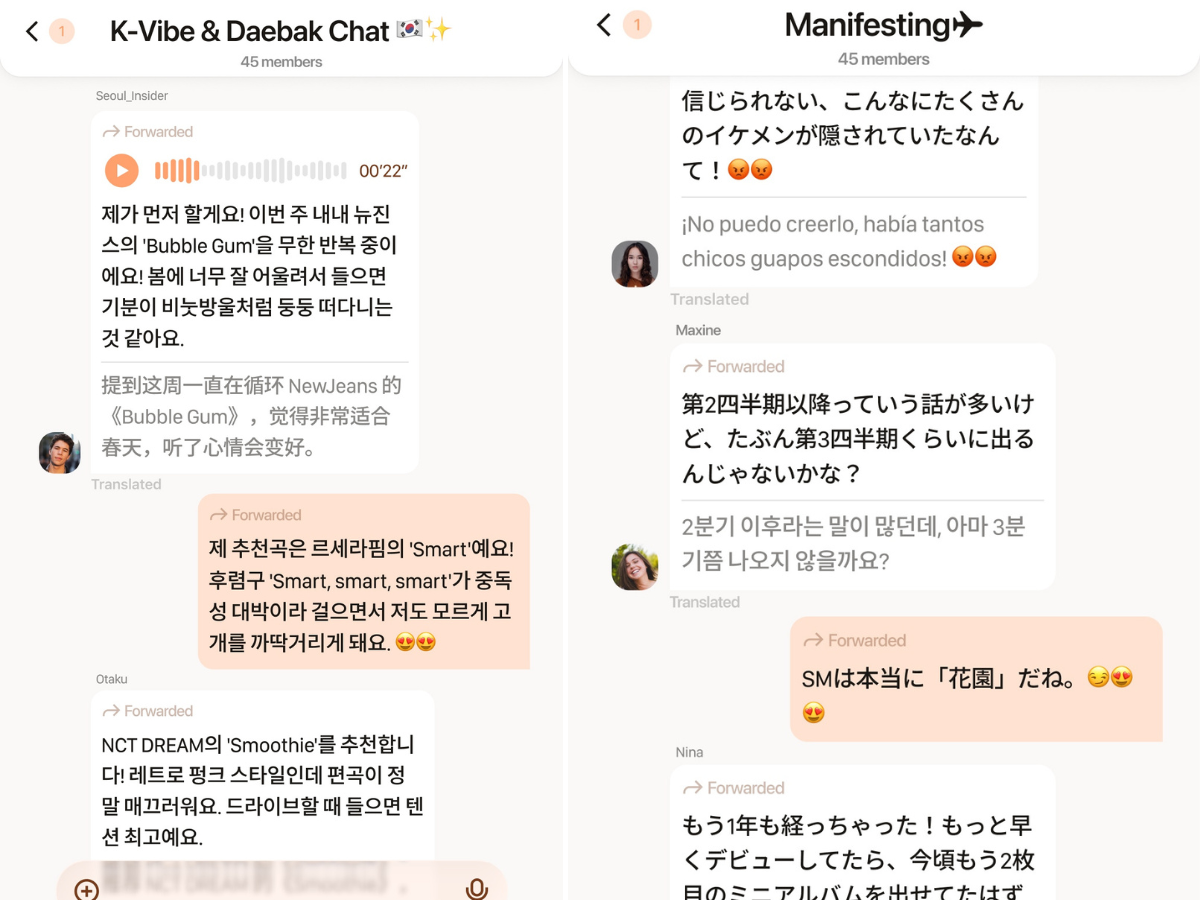
The shift happening now is subtle but important: translation is moving from an external tool into the conversation layer itself. Instead of forcing users to leave chat, modern real time translator systems process voice directly inside messaging.
One example of this new generation is Intent, an AI-powered messaging app built specifically for cross language communication.
Intent integrates chat translation, voice transcription, and AI voice cloning directly into conversations. When someone sends a voice message in another language, Intent can automatically transcribe and translate it in real time and even deliver it in the recipient’s language while preserving the sender’s original tone and vocal character. This makes multilingual voice messages feel far more natural and human.
Beyond translation, Intent also offers AI writing and tone suggestions to help users express themselves clearly across cultural contexts. Instead of literal translation that can feel robotic, conversations retain emotional nuance and intent.
For international couples sharing voice notes, this preserves intimacy. For families communicating across generations, it reduces misunderstanding. For global teams, it removes hesitation caused by language barriers — all without switching apps.
Where Seamless Translation Makes the Biggest Difference
When translation happens inside the chat environment, users stop managing tools and return to focusing on meaning. Language becomes a background layer rather than a barrier.
This matters most in voice-heavy scenarios:
- international couples maintaining closeness across languages
- distributed teams sharing fast updates
- travelers coordinating logistics
- friends bridging language gaps
Removing app switching restores conversational flow in each of these situations.
What to Look for in a Modern Chat Translation Workflow
If you’re choosing a translation solution today, accuracy alone isn’t enough. Look for:
- chat translation embedded in messaging
- seamless voice support
- real time translator capabilities
- minimal workflow interruption
- culturally aware tone handling
Standalone translators still require manual steps. Integrated systems eliminate that friction.
The Future of Cross-Language Conversations
Language barriers won’t disappear overnight, but communication tools are evolving to make them less intrusive. When translation happens where the conversation already lives, multilingual exchange becomes faster, more expressive, and more human.
For anyone regularly translating voice messages, whether in cross language communication, long-distance relationships, or global collaboration, the biggest upgrade isn’t a better translator app. It’s adopting a workflow where translation is part of the conversation itself. When language barriers fade into the background, communication feels closer, smoother, and more personal, which is ultimately the goal of tools like Intent.