AI Voice Translation for Calls: Free Real-Time Translator | Intent
Imagine calling someone who speaks a completely different language and having a natural, flowing conversation without a human interpreter, without awkward pauses, and without either person needing to speak a second language. That is the promise of AI voice translation for calls, and in 2026, it is closer to reality than most people realize.
Real-time voice translation has moved beyond clunky, delayed word-by-word output. Modern AI systems can now listen to speech, understand context and intent, translate the meaning, and deliver the result in natural-sounding speech. All within seconds. But how does it actually work, and which tools deliver on this promise? Let us break it down.
How Real-Time Voice Translation Actually Works
AI voice translation involves three connected stages, all running almost simultaneously:
Stage 1: Speech Recognition. The AI listens to the speaker and converts spoken words into text. This is automatic speech recognition (ASR). Modern ASR models handle accents, background noise, and natural speech patterns far better than systems from even two years ago.
Stage 2: Translation. The recognized text is translated from the source language to the target language. This is not word-by-word substitution — neural machine translation models understand sentence structure, idioms, and context. The AI translates meaning, not just words.
Stage 3: Speech Synthesis. The translated text is converted back into spoken audio in the target language. Advanced AI voice synthesis makes the output sound natural rather than robotic. Some systems even clone the original speaker's voice characteristics, so the translated speech sounds like it is coming from the same person.
The best real-time translation systems run all three stages with minimal latency, typically under two seconds end-to-end. The result feels less like using a translation tool and more like having a conversation.
Intent — Real-Time Voice Translation in a Messaging App
Intent approaches voice translation differently from standalone translation devices or browser-based tools. Instead of treating translation as a separate utility, it integrates real-time voice translation directly into its messaging and calling experience.
How voice translation works in Intent:
- Send a voice message in your language. The recipient hears it translated into their language automatically.
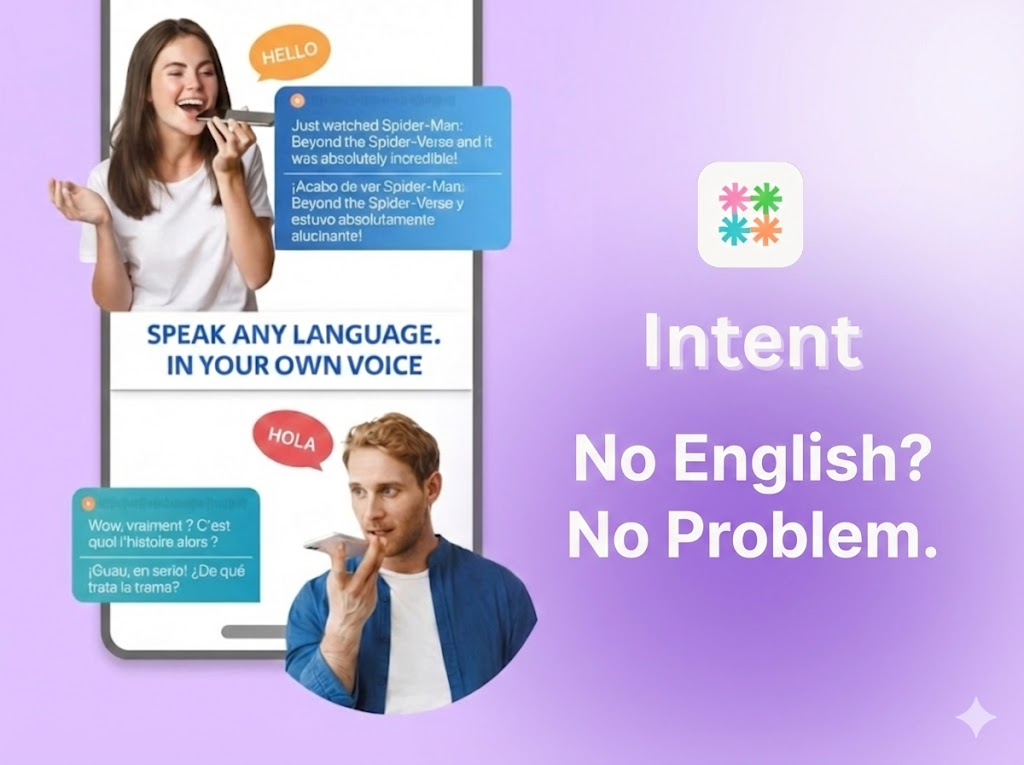
- AI voice cloning preserves your voice characteristics in the translated output. Your friend hears a message that sounds like you, but in their language.
- Voice messages are also transcribed and translated as text, so recipients can read the translation if they prefer.
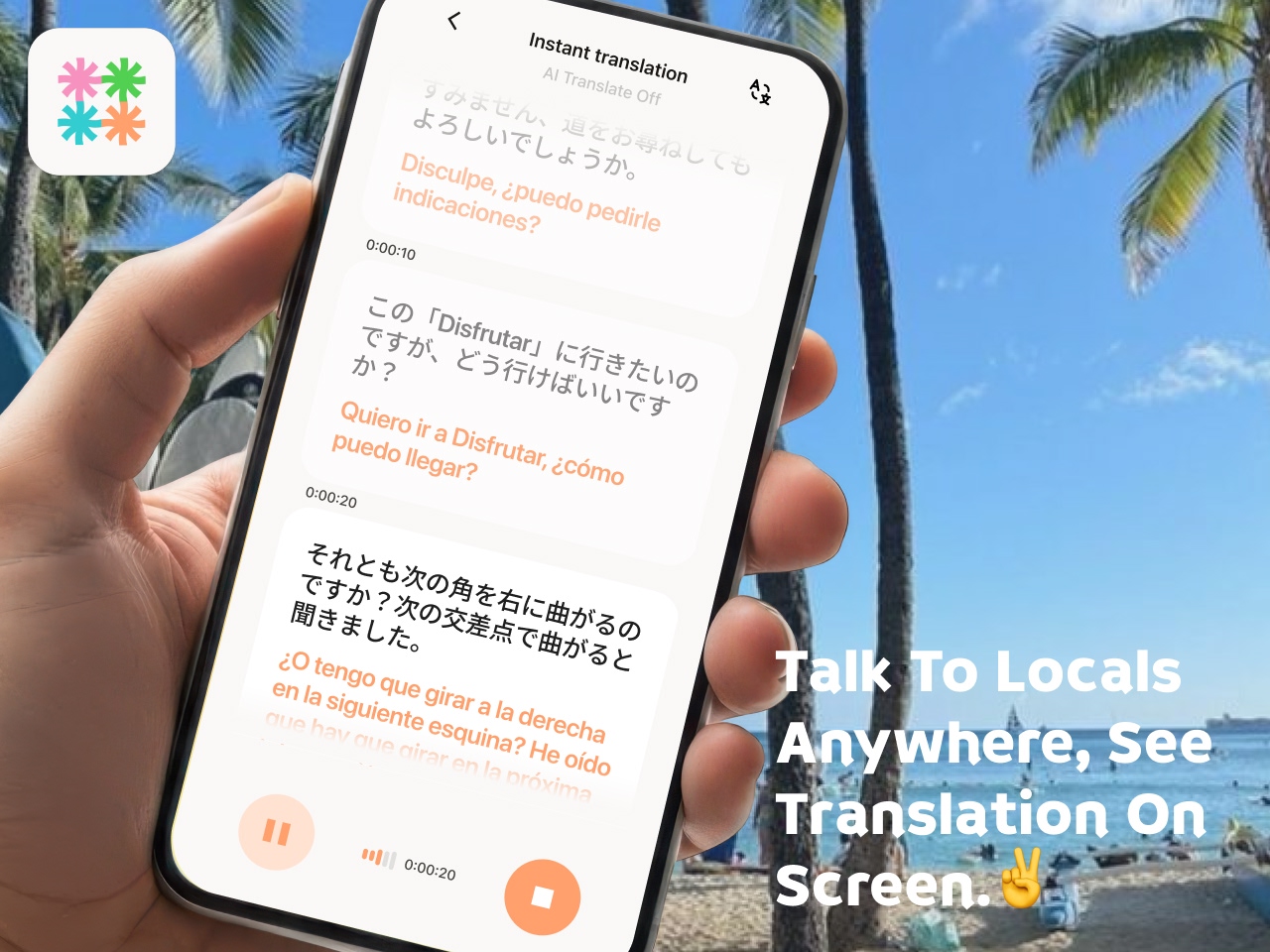
- For face-to-face conversations, Intent's Face2Face translation mode provides real-time interpretation — speak into your phone and the other person hears the translation aloud.
What sets Intent apart:
- Translation is embedded in the chat experience. You do not need a separate calling app or translation device.
- AI voice cloning creates a more personal, human connection than generic text-to-speech voices.
- Works across 100+ languages with both voice messages and text.
- Beyond voice, Intent also translates images shared in conversation using its image translator tool online, making it a complete multilingual communication platform.
For people who regularly communicate across languages through messaging and voice, Intent eliminates the friction that separate translation tools create.
Try Intent's Voice Translation Free
Translation Earbuds and Dedicated Devices
A growing category of hardware — translation earbuds and pocket translators — promises real-time voice translation for in-person conversations. Products like Timekettle W4 Pro and similar devices have gained attention for travel and business use.
How they work:
- Each person wears an earbud or shares a device. One speaks, and the other hears the translation in their ear.
- Some devices support speaker mode — the translation plays aloud through a built-in speaker.
- Connectivity is usually required (Wi-Fi or mobile data) for cloud-based translation, though a few support limited offline translation.
Strengths:
- Purpose-built for face-to-face conversations.
- No phone screen interaction needed during conversation.
- Some models offer noise cancellation for better recognition in loud environments.
Limitations:
- Expensive — most quality translation earbuds cost $200-$400.
- Language support is often narrower than app-based solutions (typically 20-40 languages).
- Translation quality depends on cloud connectivity. Offline modes are usually lower quality.
- Not useful for asynchronous communication — only work for live, in-person conversations.
- No text, image, or group chat translation capabilities.
Best for: Travelers and business professionals who have frequent in-person conversations across languages and want a hands-free solution.
Video Call Platforms With Built-In Translation
Major video conferencing platforms have started adding real-time translation features:
- Google Meet offers real-time translated captions for select language pairs.
- Microsoft Teams provides live captions and translation during meetings.
- Zoom has introduced AI-powered meeting translation features in its premium tiers.
Strengths:
- Integrated into tools people already use for work.
- No additional hardware or apps needed.
- Useful for large meetings where a human interpreter is expensive.
Limitations:
- Translation appears as text captions, not spoken audio — you still read subtitles rather than hearing a translated voice.
- Limited language pairs — most platforms support only 10-20 actively translated pairs.
- Quality varies significantly by language combination and speaker clarity.
- Only available during live calls — no help for asynchronous messages, voice notes, or image translation.
- Premium features often require enterprise subscriptions.
Best for: Workplace meetings with participants who speak different languages, especially when text-based translations (captions) are sufficient.
What Real-Time Voice Translation Cannot Do Yet
Despite impressive progress, AI voice translation still has limitations worth understanding:
- Highly specialized jargon — Medical, legal, and deeply technical terminology can challenge even the best models. Critical conversations in these fields still benefit from human interpreters.
- Simultaneous interpretation at full speed — When someone speaks very quickly with complex sentence structures, AI may lag or simplify. Most systems work best with natural, moderately-paced speech.
- Cultural nuance and humor — Jokes, sarcasm, and culturally specific references often do not translate well. AI captures the literal meaning but may miss the intent.
- Emotional tone — While AI voice cloning can match a speaker's voice, it does not always capture emotional nuance — the difference between frustrated, sarcastic, and serious delivery.
These limitations are shrinking year over year as models improve, but for now, understanding them helps set realistic expectations.
Choosing the Right Voice Translation Approach
The best option depends on your communication patterns:
- Daily messaging and voice notes across languages — Intent provides the most seamless experience with integrated voice, text, and image translation in one app.
- In-person conversations while traveling — Translation earbuds or Intent's Face2Face mode both work, with Intent being the more affordable and versatile option.
- Work meetings and video calls — Platform-native translation (Teams, Meet, Zoom) works for enterprise environments where everyone is already on the same platform.
- Professional interpretation needs — For high-stakes legal, medical, or diplomatic conversations, human interpreters remain the gold standard.
Real-time AI voice translation is no longer a futuristic concept. It is a practical, accessible tool that millions of people use daily. The technology will only get better and the gap between "machine translation" and "human conversation" continues to narrow.
Experience AI Voice Translation with Intent
Want to learn more about AI translation technology? Explore the latest insights on the Intent blog.